

April 3, 2026
Enterprise
User Experience
B2B
Marketplace
The essential B2B ecommerce checklist for digital transformation
TL;DR:
Successful B2B ecommerce transformation requires clear objectives, strategic platform choice, and ongoing iteration.
Platform selection depends on organizational capabilities, with SaaS, open-source, or hybrid options offering different benefits.
Integration of AI, marketplace features, and user experience optimization are key to competitive digital B2B success.
Orchestrating a B2B ecommerce transformation at enterprise scale is one of the most complex digital initiatives your organisation will undertake. The stakes are high: wrong platform choices, misaligned teams, or overlooked user needs can set projects back by years and cost millions. Yet most checklists treat this challenge as a simple tick-box exercise, missing the strategic depth that separates successful rollouts from expensive failures. This guide gives you a structured, end-to-end framework covering platform strategy, AI integration, marketplace models, and user experience, so you can move forward with clarity and confidence.
Table of Contents
Define key objectives and platform strategy
Assess platform options: SaaS, open-source, or hybrid
Integrate AI and marketplace capabilities
User experience, self-service, and process optimisation
What most B2B ecommerce checklists miss
Accelerate your B2B ecommerce transformation
Frequently asked questions
Key Takeaways
Point | Details |
|---|---|
Start with clear goals | Setting measurable objectives guides all digital commerce decisions. |
Choose flexible architecture | Headless and composable platforms offer greater adaptability for complex needs. |
Adopt AI and marketplaces | Integrated AI and multi-vendor features drive operational efficiency. |
Prioritise user experience | Streamlined, self-service processes ensure rapid adoption at scale. |
Define key objectives and platform strategy
Every successful B2B ecommerce transformation starts with a clear answer to one question: what are you actually trying to achieve? Without that clarity, platform decisions become guesswork and stakeholder alignment becomes nearly impossible.
Your objectives will shape every subsequent decision. Common enterprise goals include:
Global expansion: reaching new markets with localised catalogues and currency support
Channel enablement: empowering distributors, resellers, or agents through self-service portals
Cost reduction: automating manual order processing and reducing operational overhead
Rapid time-to-market: launching new product lines or customer segments without lengthy IT cycles
Once you have defined your goals, platform architecture becomes the next critical decision. Monolithic platforms bundle all functionality into a single codebase. They are simpler to manage initially, but they limit your ability to adapt quickly as business needs evolve. Headless and composable architectures, by contrast, decouple the front-end experience from back-end commerce logic, giving your teams the flexibility to iterate on buyer interfaces without disrupting core systems. For enterprise B2B, where procurement workflows are complex and buyer expectations vary by segment, composable is almost always the stronger long-term choice.
Understanding launch priorities in B2B ecommerce from your customers’ perspective is equally important. Too many projects are built around internal assumptions rather than actual buyer behaviour.
When it comes to measuring progress, digital adoption rate and self-service order share and quote-to-order time are the metrics that matter most. These tell you whether procurement managers are actually using the platform and whether it is reducing friction in their day-to-day work. Pair these metrics with regular A/B testing of your user experience to identify what is working and what needs refinement.
Delivering an optimised B2B experience requires ongoing iteration, not a one-time build. Set your measurement framework before go-live so you can act on data from day one.
Pro Tip: Document your top three business objectives and map every platform feature decision back to at least one of them. If a feature does not serve an objective, deprioritise it.
Assess platform options: SaaS, open-source, or hybrid
With your objectives defined, you are ready to evaluate the main platform types. Each carries distinct trade-offs, and the right choice depends on your organisation’s technical capability, budget, and customisation requirements.
Platform type | Deployment speed | Customisation depth | Total cost of ownership | Maintenance burden |
|---|---|---|---|---|
SaaS | Fast | Moderate | Lower | Low (vendor-managed) |
Open-source | Slower | High | Higher | High (self-managed) |
Hybrid/composable | Moderate | Very high | Variable | Shared |
SaaS platforms offer faster deployment and lower total cost of ownership, while open-source solutions like Adobe Commerce enable deeper customisation at the cost of longer deployment timelines and ongoing maintenance responsibilities.
Here is a practical breakdown of each approach:
SaaS: Ideal for organisations that want predictable costs, automatic updates, and strong out-of-the-box security. The trade-off is that deep customisation is constrained by the vendor’s architecture.
Open-source: Suits teams with strong internal development capability and highly specialised requirements. Expect longer timelines and a dedicated team to manage upgrades and security patches.
Hybrid/composable: The preferred model for most large enterprises. You can adopt a SaaS approach to B2B ecommerce for commodity functions while building custom components where differentiation matters most.
One distinction worth understanding is native B2B functionality versus plugin-based models. Platforms built with B2B natively in the core handle account hierarchies, custom pricing, and approval workflows without bolting on third-party apps. Plugin-based models can work, but they introduce integration risk and performance overhead at scale. Exploring headless vs monolithic platforms in depth will help you understand where composable architectures deliver the greatest enterprise value.

For a foundational overview, the headless commerce overview is a strong starting point for managers new to composable thinking.
Pro Tip: Always evaluate total cost of ownership over a five-year horizon, not just year-one licensing fees. Factor in developer time, integration costs, and the cost of missed opportunities when your platform cannot adapt quickly enough.
Integrate AI and marketplace capabilities
Core platform architecture sets the foundation, but AI and marketplace capabilities are what separate good B2B ecommerce from genuinely competitive digital commerce. Enterprise B2B managers are adopting multi-vendor marketplaces and AI to optimise operations and drive growth, and the organisations moving fastest are gaining measurable advantages.
AI-powered features that matter most for B2B procurement include:
Intelligent search: surfaces relevant products even when buyers use non-standard terminology or part numbers
Demand forecasting: reduces stockouts and overstock situations by predicting order patterns
Dynamic pricing: adjusts pricing in real time based on contract terms, volume, and market conditions
Product recommendations: surfaces complementary or replacement products at the right moment in the buying journey
Chatbots and virtual assistants: handle routine queries, freeing your sales team for high-value interactions
Multi-vendor marketplace models add a different dimension. Rather than managing a single product catalogue, a marketplace model allows you to onboard suppliers and partners rapidly, expanding your offering without the overhead of owning additional inventory. This is particularly powerful for organisations looking to get started with B2B ecommerce at scale or diversify their revenue streams quickly.
When evaluating vendors, use this checklist:
Capability | Native support | Plugin/integration | Not available |
|---|---|---|---|
AI-powered search | ✓ preferred | Acceptable | Avoid |
Multi-vendor catalogue management | ✓ preferred | Acceptable | Avoid |
Dynamic pricing engine | ✓ preferred | Acceptable | Avoid |
Demand forecasting | Acceptable | Acceptable | Review carefully |
Understanding B2B and B2C ecommerce differences is also essential here. AI models trained on consumer behaviour do not translate directly to procurement contexts, where buying cycles are longer, order values are higher, and decisions involve multiple stakeholders.
User experience, self-service, and process optimisation
With advanced platform architecture and AI capabilities in place, the focus shifts to the experience your buyers actually encounter every day. Even the most technically sophisticated platform will fail if procurement managers find it frustrating to use.
Here are the key steps to building a high-performing B2B user experience:
Map the procurement journey: Understand every step from product discovery to invoice reconciliation. Identify friction points and prioritise removing them.
Design for self-service: Procurement managers want to place repeat orders, track shipments, request quotes, and manage approvals without calling your sales team. Build these capabilities into the core experience.
Implement tiered access and custom catalogues: Different buyer roles need different views. A purchasing officer should see contract pricing and approved product lists, not the full public catalogue.
Automate approval workflows: Multi-level purchase approvals are a reality in enterprise B2B. Automating these workflows reduces order cycle times significantly.
Monitor and iterate: Track adoption rates, average order times, and buyer satisfaction scores. Iterate user experience via A/B testing and prioritise self-service ordering for procurement decision-makers.
As one industry framework puts it:
The best B2B ecommerce experiences feel as intuitive as consumer platforms but are built around the complexity of enterprise procurement.
Addressing ecommerce design for B2B buyers means thinking beyond aesthetics. Navigation, search, and checkout flows must reflect how procurement teams actually work, not how consumer shoppers browse. Pairing strong UX design with well-considered B2B pricing strategies ensures your platform supports the commercial relationships your buyers expect.
What most B2B ecommerce checklists miss
Here is something most guides will not tell you: technology is rarely the reason B2B ecommerce transformations fail. The real culprits are misaligned teams, under-resourced change management, and a failure to co-design new processes with the people who will actually use them.
We have seen organisations invest heavily in best-in-class platforms, only to watch adoption stall because sales operations, IT, and frontline teams were not brought into the process early enough. The platform becomes a tool nobody trusts because nobody was asked what they needed.
The fix is straightforward but often skipped: run structured discovery sessions with each stakeholder group before you finalise any platform or process decisions. Build your B2B ecommerce checklist around user pain points, not feature lists. Then plan for at least two or three rounds of iteration post-launch before you declare success. Digital transformation is not a project with an end date. It is an ongoing capability you build over time.
Accelerate your B2B ecommerce transformation
The checklist above gives you the strategic framework. What you need next is a platform that can actually deliver on it.
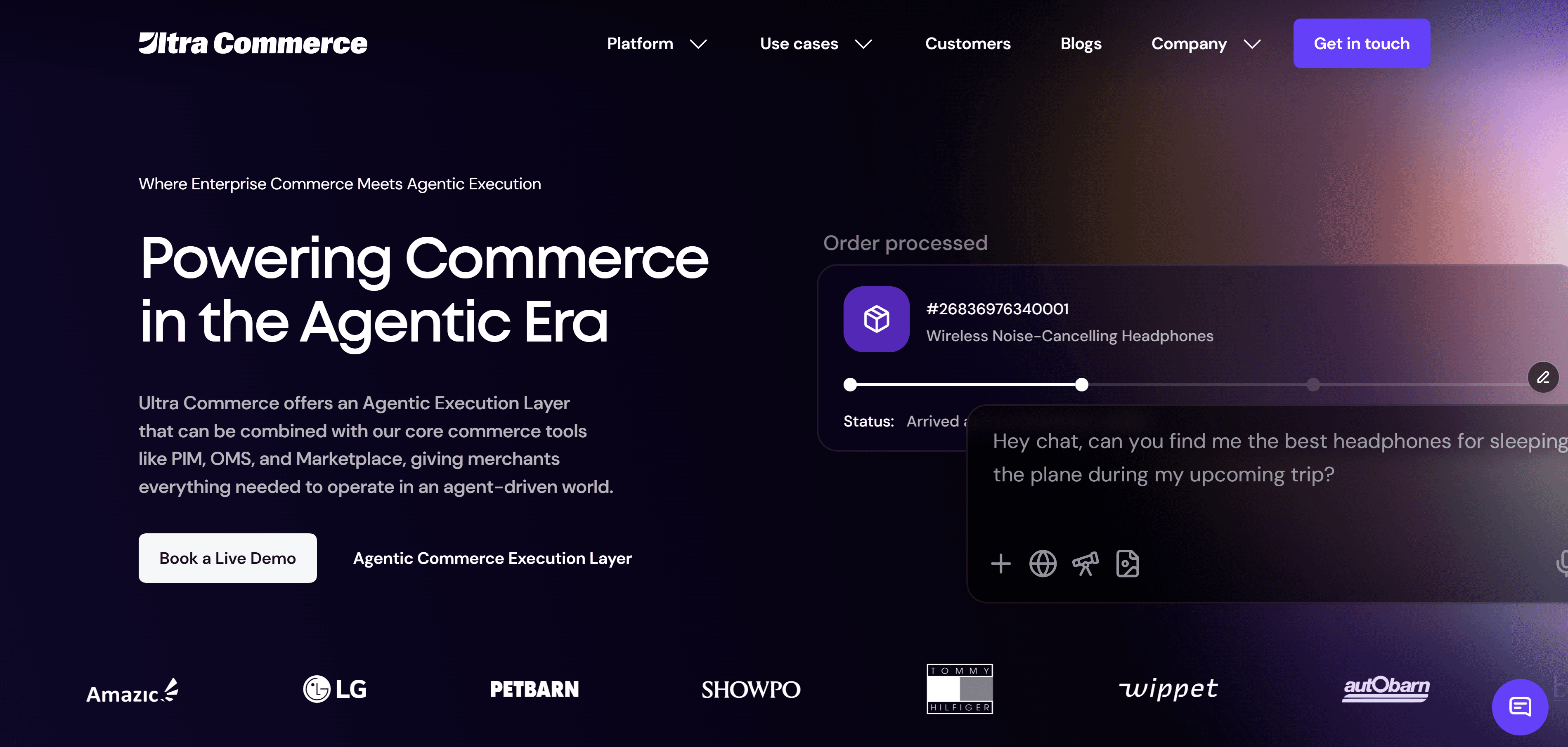
Ultra Commerce is built specifically for enterprise B2B organisations that need headless, composable, and multi-vendor marketplace solutions without the disruption of full replatforming. With native AI capabilities, modular components including PIM and OMS, and recognition in Gartner’s Magic Quadrant, Ultra Commerce aligns your strategy with the technology to execute it. Whether you are expanding globally, enabling new channels, or driving self-service adoption, explore what an enterprise ecommerce platform purpose-built for your complexity can do for your business.
Frequently asked questions
What are the most important metrics for B2B ecommerce success?
Digital adoption rate, self-service order share, and quote-to-order time are the three metrics that most directly reflect whether your platform is delivering value to procurement teams.
How do I choose between SaaS and open-source platforms?
SaaS offers faster roll-out and lower total cost of ownership, making it ideal for most enterprises, while open-source suits organisations with strong internal development teams and highly specific customisation needs.
How does AI improve B2B ecommerce?
AI-driven features optimise operations through smarter search, tailored product recommendations, accurate demand forecasting, and faster procurement cycles that reduce manual effort across the buying journey.
What is the main difference between B2B and B2C ecommerce platforms?
B2B platforms must handle account hierarchies, custom pricing tiers, bulk ordering, and multi-level approval workflows that are simply not required in consumer-facing commerce environments.
Do I need a marketplace model for B2B ecommerce?
Adoption of multi-vendor marketplaces is rising among B2B managers, but a marketplace model is most valuable when you need to rapidly expand your product catalogue or onboard suppliers without taking on additional inventory risk.